
The CIA Book Club by Charlie English
Read by Michael David Axtell
Publication Date: March 2025
Summary from Goodreads:
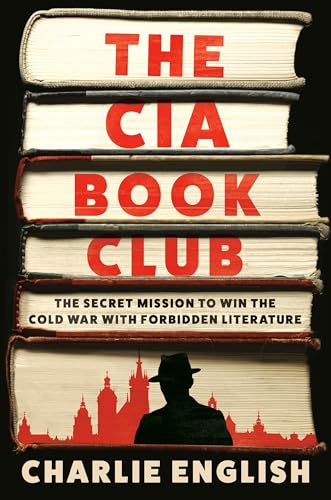
For almost five decades after the Second World War, the Iron Curtain divided Europe, standing as the longest and most heavily guarded border on earth. With the risk of nuclear annihilation too high for physical combat, conflict was reserved for the psychological sphere. No one understood this battle of hearts, minds, and intellects more clearly than Bucharest-born George Minden, the head of a covert intelligence operation known as the “CIA books program.” This initiative aimed to win the Cold War with to undermine the censorship of the Soviet bloc and inspire revolt by offering different visions of thought and culture to the people.
From its Manhattan headquarters, Minden’s global CIA “book club” would infiltrate millions of banned titles into the Eastern Bloc, written by a vast and eclectic list of authors. Volumes were smuggled on trucks and aboard yachts, dropped from balloons, and hidden in the luggage of hundreds of thousands of individual travelers. Once inside Soviet bloc, each book would circulate secretly among dozens of like-minded readers, quietly turning them into dissidents. Soon, underground print shops began to reproduce the books, too. By the late 1980s, illicit literature in Poland was so pervasive that the system of communist censorship broke down, and the Iron Curtain soon followed.
Former head of international news at the Guardian, Charlie English is the first to uncover this true story of Cold War spy craft, smuggling and secret printing operations, highlighting the work of a handful of extraordinary people who risked their lives to stand up to the intellectual strait-jacket Stalin created. People like Miroslaw Chojecki, an underground Polish publisher who endured beatings, force-feeding and exile in service of this mission and Minden, the CIA’s mastermind, who didn’t waver in his belief that truth, culture, and diversity of thought could help free the “captive nations” of Eastern Europe. This is a story about the power of the printed word as a means of resistance and liberation. Books, it shows, can set you free.

Confession:
This was a very interesting nonfiction book about an aspect of the cold war that most people are not aware of. The CIA was heavily involved with bringing banned literature and supporting journalists and publicists in Soviet ruled countries, fighting communist rule. This book mostly focused on the dissidents in Poland and not as much on the CIA’s role, but it was still a really good look at how books and information can topple a government.
Michael David Axtell did a superb job with the narration. He has a nice clean voice that was easy to listen to. He occasionally used accents when various people were being quoted which broke up the narrative nicely. His voice added to the almost story like quality to the writing of this important story.
The summary and title is a bit misleading in that you think the story will be all about the CIA and their involvement in smuggling books into Soviet run countries. That part of the story was there, but it wasn’t the main focus of the book. The book focused on Poland and their struggles, while other soviet ruled countries were only mentioned in passing. Don’t get me wrong though, it was still a fascinating part of history and I had little knowledge of the struggles these people went through, but I still wanted to know more about the CIA. Their role was mostly supplying a few copies of all of the banned books, and the means to reproduce them, such as printing presses and then later copying machines and computers, to the countries in the Soviet Union. But the rest of the book focused on those people who risked their lives and freedom to get these books and other literature to the masses of people who wanted to read them.
The CIA started this covert operation back in the 50’s and continued it until the fall of the USSR 1991. It was one of their most successful, and relatively cheap, covert operations. It was interesting to learn about the varied ways they were able to smuggle in the books and equipment, as well as paper, into these countries. The focus on Poland in this book is mostly because they were the most successful at protesting against the communist regime and at using these materials to do it. The book focused on just a few of these people and the hardships they endured, from imprisonment, torture, and constant harassment from the government. But they all had the focus of getting their freedom back, and luckily they succeeded.
The book is very well written, at times almost feeling like a story with lots of action and adventure. But the author never lost sight of the horrors of what was going on inside the Soviet Union. Some of the things done to these people were hard to hear, but necessary.
If you are at all interested in history this is a book you should consider reading. It is a little known story but an important one. When a country loses its ability to be creative and to report the truth, then it is in danger of losing its identity and its culture.
 Confessions of a Serial Reader